
June 1, 2026
When the deal is engineered for capital protection, not wildcat speculation
By any traditional EB‑5 marketing playbook, oil and gas should be a hard sell. It is rural. It is volatile. It is wrapped in headlines about boom‑and‑bust cycles. Competitors have seized on that narrative, warning that rural oil projects “should be avoided” because they allegedly gamble with immigrant investors’ life savings.
What those critics are really describing is a badly structured oil deal: EB‑5 capital placed at risk as early‑stage drilling money, sitting behind everyone else in the capital stack, on acreage with uncertain geology, and no disciplined path to repayment.
Change that structure—and the risk profile improves significantly.
When EB‑5 is structured as senior, asset‑backed capital, deployed after wells are producing, in a proven formation with cash‑flow reserves and a short, defined term, oil and gas can look less like a casino and more like a specialized income‑producing infrastructure play. In some respects, it can be safer than the typical EB‑5 real‑estate project that depends on future refinancing and lease‑up in a crowded inflationary market. Combined with a extremely low breakeven point, oil and gas wells look very appealing compared to real estate.
Below, point‑by‑point, is how a correctly engineered oil and gas project can work for EB‑5—and why the conventional wisdom that “real estate is safer” often misses the real risks.

The core EB‑5 problem: investors want a green card and return of capital, not a home run
Serious EB‑5 investors tend to share three priorities:
- Immigration result: approval of the I‑526E and I‑829, and permanent residency for the family.
- Capital preservation: return of principal, ideally with modest but steady returns.
- Reasonable timeline: not waiting a decade to find out if the money and the green card are safe.
The instinctive answer has been real estate: a hotel in Miami, condos in New York, mixed‑use towers in Los Angeles. Familiar assets, glossy brochures, and the comforting idea that “at least there is a building.”
But over the last decade, EB‑5 investors have watched high‑profile real‑estate projects stall, blow through budgets, default on construction loans, or get caught in market downturns. Immigration petitions tied to them have been delayed or imperiled. A building is not a guarantee; it is a business plan, with real market risk.
Oil and gas, if structured recklessly, can be even worse. The key insight is that it does not have to be.
A properly designed EB‑5 energy structure does seven things differently:
- Puts EB‑5 in a senior loan position above all other capital.
- Deploys EB‑5 capital only after each well is producing (“backfill”), not as first‑risk drilling money.
- Locks a portion of monthly cash flow into a restricted reserve fund dedicated to EB‑5 repayment.
- Targets a proven, continuously producing region such as the Austin Chalk and Eagle Ford—not frontier wildcat acreage.
- Limits the EB‑5 capital term to roughly 36–42 months after first closing.
- Locates in a rural Targeted Employment Area (TEA), qualifying for faster petition processing and set‑aside visas.
- Operates in a policy environment currently favorable to U.S. oil and gas exploration and drilling.
Layered together, these design choices answer most of the legitimate concerns raised by opponents—while creating a risk profile that compares favorably to many real‑estate offerings.
1. Senior loan position: EB‑5 at the top of the capital stack
Follow the money, and you will find the risk.
In many troubled EB‑5 deals—whether hotel, condo, or wellhead—immigrant investors end up in a junior, last‑paid position. Banks and senior lenders get first claim on project assets; sponsors protect their own equity via preferred returns and fees; EB‑5 investors are effectively the shock absorber.
Competitor critiques of oil EB‑5 often assume this structure: EB‑5 is subordinated, unsecured, and exposed to full loss if the project underperforms.
A very different picture emerges when EB‑5 is structured as senior secured debt:
- The EB‑5 partnership (NCE) lends to the project company in a first‑priority lien position.
- Sponsor equity sits beneath EB‑5 and takes the true exploration and development risk.
- Any additional financing (if permitted at all) is contractually subordinated to EB‑5 repayment.
In that configuration, EB‑5 investors are not the speculative; they are the core senior lender, structurally similar to a bank holding the first mortgage. Their claim is secured by tangible producing assets—wells, equipment, and hydrocarbon reserves—not just a paper development right.
This runs directly counter to the narrative that oil EB‑5 must be “wildcat equity.” It does not—if the capital stack is built for protection, not promotion.
2. EB‑5 “backfills” after each well begins production
The loudest and most reasonable objection to rural oil EB‑5 projects is that they often use immigrant capital as first‑loss drilling money. Wells may or may not find commercial quantities. If drilling fails, the capital is gone. No cash flow, no repayment, no sustained jobs.
The solution is simple but rarely adopted: change the timing.
In a disciplined EB‑5 energy structure:
- The operator and sponsor of the wells fund Phase One: leasing, drilling, completion, and bringing wells onto production.
- Wells are monitored; their initial production rates and decline curves are measured. Only wells that meet defined performance criteria are included.
- Only then does EB‑5 capital flow in, as a backfill—refinancing part of those proven drilling and completion costs.
In other words, EB‑5 investors are not funding “holes in the ground.” They are funding already producing wells with track records, where the key uncertainties—whether the rock will produce and at roughly what rate—have been substantially reduced.
For an EB‑5 investor, that is the difference between:
- Writing a check to see if there will be oil, and
- Lending against wells that are already generating measurable revenue.
The former is speculation. The latter is closer to asset‑backed lending.
3. Restricted reserve fund: a contractual engine for repayment
Even if EB‑5 is senior and deployed post‑production, critics point out that oil prices are volatile. What happens if prices dip? Will the sponsor simply divert cash to themselves or to more drilling, leaving EB‑5 investors waiting?
The answer lies in how cash flow is governed.
In the strongest model, the project establishes a restricted reserve fund that operates as follows:
- Once production starts and revenue comes in, a contractually defined percentage of net cash flow is automatically swept into a segregated reserve account.
- The reserve is pledged to EB‑5 investors and controlled by the EB‑5 lender or an independent escrow/administrative agent—not solely by the sponsor.
- The fund is sized to cover scheduled interest and the targeted repayment amount separate of operating expenses necessary to repay the EB‑5 loan within approximately 36–42 months.
- Only after reserve targets and minimum debt‑service coverage are met can excess cash flow be distributed to the sponsor or used for discretionary expansion.
In both strong and weak price environments, the first call on cash flow is the restricted reserve and debt service—not sponsor bonuses or speculative new wells. Protecting EB-5 investors’ capital in any type of market.
No reserve fund eliminates market risk. But it significantly reduces the chance that operational success gets converted into sponsor windfalls while EB‑5 investors wait in line.
4. Proven geology in the Austin Chalk and Eagle Ford—not wildcat country
Oil critics often blur an important distinction: not all geology is equal.
Many of the nightmare scenarios involve “wildcatting”—drilling in unproven basins or frontier formations with little historical data. In that context, every well is a roll of the dice. If the play does not work, the EB‑5 investor is left with sunk costs and a cautionary tale.
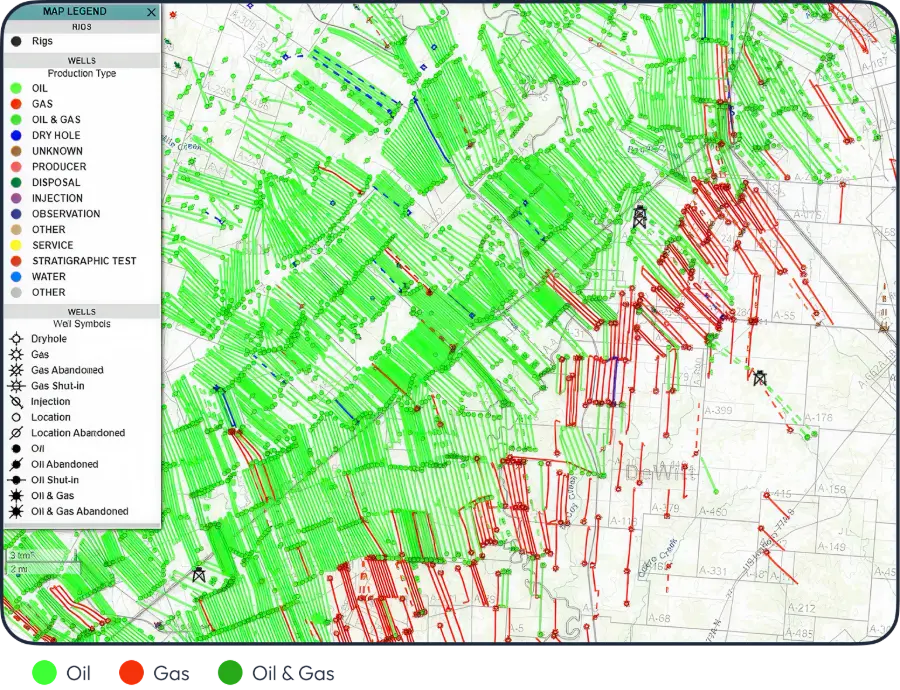
Contrast that with a project in a highly proven and producing area of the Austin Chalk and Eagle Ford formations in Texas:
- These formations are among the most studied and heavily developed plays in the U.S.
- Operators have decades of data on rock properties, pressure regimes, decline curves, and optimal completion techniques.
- The geology in core areas is relatively continuous and laterally predictable, meaning that wells drilled across a defined area are more likely to behave within a known range of outcomes.
- Existing production and analog wells provide empirical benchmarks for forecasting cash flow.
That does not make every well a winner. It does, however, shift the risk profile away from “will we find hydrocarbons at all?” toward “how closely will these wells match known type curves?”
When EB‑5 capital is:
- Senior,
- Deployed only into already producing Austin Chalk / Eagle Ford wells, and
- Secured by those wells’ projected production using conservative, independently vetted assumptions,
the geological risk has been substantially tamed compared to wildcatting in a new basin—or, for that matter, building luxury condos in a market that suddenly stops absorbing inventory.
5. A defined 36–42 month EB‑5 term: shorter, not forever
One of the most corrosive features of many EB‑5 investments—especially in real estate—is the indeterminate time horizon.
Projects promise five‑ to seven‑year terms, then ask for extensions because:
- Construction took longer than expected.
- Leasing is behind schedule.
- The anticipated take‑out financing is no longer available.
- Market conditions make asset sales unattractive.
Investors find themselves locked in for years longer than planned, often with immigration status—and capital—still unresolved.
An oil and gas structure with a 36–42 month term after first EB‑5 closing attacks that uncertainty on two fronts:
- Operationally, the development cycle for drilling and bringing wells online is far shorter than for constructing a hotel or multi‑use tower. Wells can be drilled, completed, and placed on production in three (3) months, not years.
- Financially, the restricted reserve mechanism and amortization schedule are designed from the outset to repay principal within that 3–3.5 year window, assuming conservative price and production scenarios.
While any investment may experience delays, an engineered short‑term structure provides a clear, testable timeline. Investors know when the project expects to be in full production, when the reserve should be built, and when their capital is targeted to come back.
For EB‑5 families trying to synchronize immigration plans, children’s schooling, and business decisions, that clarity is worth everything in the world.
6. Rural TEA status: faster processing and reserved visas
Here is where oil’s rural character flips from “marketing problem” to immigration advantage.
Under the EB‑5 Reform and Integrity Act, projects in rural Targeted Employment Areas (TEAs) benefit from:
- Visa set‑asides: a reserved portion of EB‑5 visas each year specifically for rural projects.
- Priority processing: USCIS has signaled faster adjudication for rural petitions, which, in practice, can translate into quicker I‑526E decisions relative to non‑rural, oversubscribed categories.
Oil and gas projects, by their nature, are typically located in sparsely populated counties that qualify as rural TEAs. That means:
- The minimum investment is generally $800,000 rather than the higher non‑TEA threshold.
- Investors from historically backlogged countries may find shorter lines and faster decisions than in crowded urban real‑estate deals.
- Rural employment impacts—direct, indirect, and induced—can be robust, supporting the all‑important 10‑job creation requirement.
For an EB‑5 investor whose primary concern is how quickly and reliably their family can immigrate, that rural TEA status is not a side benefit. It is central.
7. A policy environment currently supportive of domestic energy
No investment thesis should be built on politics. But ignoring the regulatory climate is equally naïve.
Despite longer‑term debates about energy transition, the current U.S. policy environment remains broadly supportive of domestic oil and gas production, particularly when it affects:
- Energy security and independence,
- Rural employment and infrastructure, and
- Strategic basins like those in Texas.
For EB‑5 purposes, that climate matters in several ways:
- Permits for drilling and completions in established basins tend to follow well‑understood processes, not ad‑hoc experimentation.
- State and local governments in key producing areas often view responsible development as economically critical—and act accordingly.
- Infrastructure, from pipelines to service providers, is well‑developed, reducing operational risk.
Policy winds can shift. But for investors comparing sectors, it is notable that large urban real‑estate projects have increasingly bumped into zoning fights, community opposition, construction regulations, and financing headwinds, while many established oil regions continue to view production as a core economic driver. Sometimes permits are submitted and approved in as fast as 48-72 hours to begin drilling.
Why properly structured oil and gas can be safer than “safe” real estate
Investors are conditioned to equate “building” with safety and “oil barrel” with risk. The reality, when you unpack actual EB‑5 structures, is more nuanced.
Typical EB‑5 real estate risk profile:
- EB‑5 often sits behind bank construction loans as mezzanine debt, or even worse preferred or common equity.
- Repayment depends on future refinancing or asset sales at assumed values and cap rates.
- Cash flow relies on achieving projected occupancy, room rates, or condo absorption.
- Timeline is vulnerable to construction delays, cost overruns, lender conditions, and market cycles.
- If the project stumbles, senior lenders can foreclose, leaving EB‑5 investors holding a junior, impaired claim.
Properly structured EB‑5 oil & gas risk profile:
- EB‑5 capital holds a senior, first‑priority secured position.
- It is deployed after wells are drilled and producing, not as first‑loss exploration money.
- The loan is repaid from real‑time commodity production, with prices hedged or modeled conservatively.
- A restricted reserve fund captures a portion of monthly cash flow specifically for EB‑5 interest and principal repayment.
- The project is in a known, continuously producing formation with decades of empirical data.
- The capital term is short and defined (36–42 months), and rural TEA status offers priority processing.
In that side‑by‑side comparison, oil and gas—if engineered with investor protection in mind—starts to look less like a gamble and more like an institutional asset for capital preservation, with fewer unknowns than a speculative high‑rise opening into an overbuilt market.
The risk that dominates a bad oil EB‑5 deal—dry holes, unknown geology, last‑out equity—has been carved out and removed. What remains is commodity and operational risk, mitigated by structure, seniority, and geography.
The investigative bottom line
The warning that “rural oil EB‑5 projects should be avoided” is only half the story. The half it leaves out is structure.
If EB‑5 investors are:
- Junior in the capital stack,
- Funding unproven drilling,
- On frontier acreage,
- With no reserve mechanisms and no clear term,
then yes, they are signing up for a risk profile that is wildly misaligned with the goal of immigration certainty and capital preservation.
But if the deal is built around seven core protections—
- Senior loan position to all other capital,
- EB‑5 capital backfilling into each well only after production begins,
- A restricted reserve fund capturing monthly cash flow for repayment,
- Proven Austin Chalk / Eagle Ford geology with continuous production history,
- A 36–42 month capital term after first closing,
- Rural TEA status for faster processing and reserved visas, and
- A policy environment supportive of domestic energy—
then oil and gas stops being the villain of the EB‑5 story. It becomes what many glossy real‑estate deals only claim to be: a targeted, cash‑flowing, asset‑backed path to a U.S. green card.
That does not make it risk‑free. No honest sponsor—will tell you it is. But when the capital stack, cash‑flow mechanics, geology, and immigration incentives all pull in the same direction, the riskiest thing about oil EB‑5 may be the reputation it has inherited from deals that were simply built wrong.